~ Will Johnson, Embodiment.net
Thursday, September 17, 2015
The price of freedom
"[W]hile we offer the teaching freely, that doesn’t mean that it comes without a significant price, a steep one at that, and that price is the courage to place yourself inside an alchemical crucible of body and mind, to play with balance in the sitting posture for long hours, to confront the way in which you inhibit your breath, to relax your habitual patterns of resistance and undergo a profound process of transformation. Nothing could be more natural, but don’t think that shifting our patterns of body and mind 180 degrees is the proverbial piece of cake. Our mind is evidently far more drawn to continuing along in the groove of its confusion, and our body apparently prefers the familiarity of its holding patterns to the at times wild ride of relaxing and dissolving them. But when we’re able to make this shift, when we have the courage to face what we’ve been resisting for so very long, wonderful things can start to happen, and whatever we have to do to enact this shift in consciousness—from the unnatural back to the natural—is a price well worth paying."
~ Will Johnson, Embodiment.net
~ Will Johnson, Embodiment.net


Wednesday, September 16, 2015
BGR Seattle events

Seattle Walk to Feed the Hungry with Bhikkhu Bodhi
October 16 - Public Talk
October 17 - Walk to Feed the Hungry
Buddhist Global Relief's annual Walk to Feed the Hungry highlights the important issue of global hunger. This year the Seattle Walk will take place on Saturday October 17.
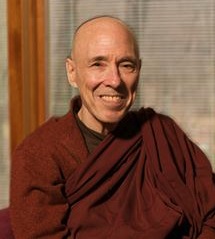 The Venerable Bhikkhu Bodhi, the founder of Buddhist Global Relief (BGR), is known around the world as a leading scholar-monk and translator. We are very happy that he will be attending the Seattle Walk to Feed the Hungry for the first time this year.
Bhikkhu Bodhi will also give a public talk on "Forging a Moral Vision in an Age of Crisis" at 7:00 p.m. on Friday October 16 at the Seattle Insight Meditation Society, 2729 - 6th Ave South. For more information visit seattleinsight.org.
Everyone is welcome to participate in the Walk to Feed the Hungry, a community event sponsored by Buddhist Global Relief and the Northwest Dharma Association. The Walk will begin at 9:00 a.m. on Saturday October 17, at Volunteer Park on Capitol Hill. We'll walk a couple miles on Capitol Hill and then return to the Park, where Bhikkhu Bodhi will give a talk.
Even if you can't join us on the Walk, you can make a donation to Buddhist Global Relief’s work by visiting Seattle BGR's First Giving page.
Buddhist Global Relief was founded in 2007 as a relief organization dedicated to alleviating chronic malnutrition and hunger around the world. BGR's Walks to Feed the Hungry take place in cities across the United States and abroad. To date, BGR has supported over 70 projects in aid, education, and agriculture around the globe including Asia, Africa, Haiti, and the United States. For more information, please visit buddhistglobalrelief.org
BGR Media Contact
Carla Prater, Assistant Director
Wednesday, July 22, 2015
Cooperating
.
"[W]e are not struggling to become something we are not. We are learning to cooperate with what we always were."
~ John Makransky, Awakening Through Love
.
Thursday, March 19, 2015
Empty compassion breath
The antidote to attachment is recognizing everything as empty (of permanence, solidity, independence, etc)
The remedy for emptiness is compassion, resting openly in whatever arises.
The breath is a reliable gateway to both.
Rest in just recognizing.

Tuesday, February 17, 2015

Thursday, February 12, 2015
Contemplative Living and Dharma Immersion
Contemplative Living and Dharma Immersion
IF YOU ARE A PERSON WHO
— Sincerely wishes to live in service to others and to the Dharma
— Yearns to support and deepen your Buddhist practice
— Desires to live and work in a small community of like-minded practitioners
— Is deeply committed to right speech and the ever-present challenge of honest and compassionate communication
— Can imagine living where the nearest movie theater is 40 miles away
— Enjoys deer grazing outside your window and coyotes yipping in the moonlight
— Loves a crisp winter snowfall, the scent of balsamroot and lupine in the spring, and the dry winds of summer
READ ON . . .
With its first Three Year Retreat planned to start on April 4, 2015, Kagyu Changchub Chuling (KCC) is searching for qualified, mature practitioners to live and work at its rural retreat center, Ser Chö Ösel Ling, to support the long-retreat. (For more information on Ser Cho Osel Ling, please see our website at KCC.org)
The primary practical responsibilities of the retreat team are:
1. Providing for the general wellbeing of retreatants, a group of up to 16 living in a cloistered environment of intensive dharma practice.
2. Attending to the dharma teachers who provide spiritual guidance for retreat.
3. Caring for the facilities, vehicles, equipment and natural landscape that make retreat possible. The positions require both autonomous decision-making and the ability to live and work closely with other stipend volunteers and with the retreat teachers.
People on the retreat team need skills or experience in two or more of the following categories: meal preparation and planning for 12-16 people, kitchen management, dishwashing and food prep, general administration and budgets, human resources. While we are primarily looking for people with kitchen and administrative skills, those with experience in construction and facilities management, vehicle and road maintenance, and land stewardship will also be considered.
A modest stipend plus and room and board are provided. Candidates who have long term, stable experience in a spiritual community, and willingness to do the hard work of evolving a stipend volunteer community at SCOL will be given high priority.
If you have appropriate skills or experience and appreciate what a precious opportunity it is to support those in long retreat, please submit your résumé and three references right away to:
Tim Campbell tcampbell@amerlotus.com & Linda Besant dancebuzz@soapstone.org
Friday, January 16, 2015
Don't stop thinking
Every practice is a medicine for a specific ailment.
Letting go is the medicine for clinging and grasping to things as solid and permanent.
Too much letting go, you'll lose your hygiene and community.
Crazy wisdom is a way of testing your attachment to conventional social "reality".
Too much crazy wisdom and you'll become an unethical monster.
The thinking mind's discrimination and planning are essential and wonderful.
Prajna is the discriminating sword, cutting the false from the actual.
But the thinking mind, disconnected from senses and heart, can fall into distorted perception.
Mind, heart, and senses are meant to work together.
The mind thinks it's the highest and believes it's in control -- obviously not so -- just lay your hand on a hot stove and the body will take charge.
Don't abandon any of your faculties.
Look into all perceptions and discern the false from the actual.
Learn to feel when the mind is racing and distorted, and bring body and heart back into awareness.
Beware ideas or emotions that tell you to abandon sense or sensitivity.
First, do no harm.
Second, intend to do good.
Third, purify perception.
This is the teaching of the Buddha.
Thursday, December 18, 2014
Exaggeration
papañca: complication, proliferation, objectification. The tendency of the mind to proliferate issues from the sense of "self." This term can also be translated as self-reflexive thinking, reification, falsification, distortion, elaboration, or exaggeration.
~ from A Glossary of Pali and Buddhist Terms by Thanissaro Bhikkhu
Right Here, Right There
or place expectations on the future.
What is past is left behind.
The future is as yet unreached.
Whatever quality is present
you clearly see right there, right there.
Not taken in, unshaken,
that's how you develop the heart.
Ardently doing what should be done today, for --
who knows? -- tomorrow death.
There is no bargaining with Mortality
& his mighty horde.
Whoever lives thus ardently,
relentlessly both day & night,
has truly had an auspicious day:
so says the Peaceful Sage.
Thursday, December 11, 2014
Things don't disappear
Things appear, and disappear, because they are dependent upon innumerable causes and conditions. Things don't disappear because we label them "empty." They are already empty of permanence and separateness, because they are utterly dependent. Things don't disappear, but our experience of them is transformed when we recognize that emptiness and interdependence are two aspects of the same nature.
Ruts
Recognizing that experience isn't really solid or permanent is the medicine for taking things too seriously.
Sensitivity to suffering (especially others' suffering) is the medicine for passivity and meaninglessness.
But emptiness is poison if it leads you to ignoring suffering, and suffering is unhelpful if it overwhelms. Falling into one of these ruts is not so good. But if you're lurching back and forth from one rut to the other, you spend at least some time on the road. The middle way is possible. We each have the ability to recognize the nature of experience and to ease the pain of living for ourselves and others.
Wednesday, August 20, 2014
BGR Walk to Feed the Hungry
Do you have enough to eat? Many people do not!
Please help alleviate hunger by contributing online.
The point of cultivating awareness is to gain insight and clarity into the nature of suffering and its causes, and the end of suffering and its causes. Suffering arises internally, as painful sensations, emotional dramas, and mental struggle. And suffering arises externally as relational, social, and political conflict. One can debate and quibble over the meaning of "internal" and "external", but regardless of one's views and opinions, the suffering is there, and responding to it is the point of buddhist practice.
Bhikkhu Bodhi, one of the great translators of Buddhist sutras, founded Buddhist Global Relief in order to "provide direct food aid to people afflicted by hunger and malnutrition, to promote ecologically sustainable agriculture, to support the education of girls and women, and to give women an opportunity to start right livelihood projects to support their families." BGR is a 501(c)(3) tax-exempt organization, with admnistrative and fundraising expenses of less than 10% of its budget -- a remarkably lean and efficient organization.
For the past three years, I've helped organize the annual Walk to Feed the Hungry event in Seattle. (There are also walks this year in Houston, Los Angeles, New York, San Francisco, St. Louis, and other cities). This year the Seattle event is on Saturday September 6. Please join us. Check-in will open at 9 a.m., we'll warm up with some easy tai chi, and we'll start walking about 10:00 a.m. We'll walk down 15th to Madison, then up Broadway back to the Park. We will provide lunch for the monastics who will be with us, and everyone else is encouraged to bring a picnic and join us for lunch!
Please join us by walking, raising funds, donating or volunteering. If you can't make it to the walk, donate and ask your friends to give to the cause of alleviating hunger around the world by contributing online. Large or small, your contribution will help relieve suffering.
Thank you.

Wednesday, August 6, 2014
Three Doors
Inspiration, like any sensation or feeling, comes and goes. It is possible to practice every day whether one feels inspired or not. Intention is different than inspiration; intention depends on connecting with your own experience, directly and personally -- connecting, and caring, and taking responsibility. Much of practice is just that connecting and reconnecting, taking the practice to heart.
Buddhism is a huge collection of various methods and techniques. They can be helpful in focusing energy and dealing with obstacles, but we also need to find the essence of practice so that methods and techniques don't get in the way. One way to approach the essence of practice is through the Tibetan Shangpa tradition's three doors to freedom: insight, compassion, and faith.
Insight is seeing how things are. Perhaps the two most fundamental insights are that things are impermanent and interdependent. Everything is impermanent, constantly changing. And everything is interdependent: nothing exists by itself, separate from causes and conditions. Recognize the never-ending flow of experience and events. And recognize that everything is utterly and completely dependent on particular causes and conditions.
Such recognition is challenging, but it is possible, and doesn't have to be complicated. can be simple. Practice keeping a continuous thread of attention on the ever-changing flow of sensations, feelings, and thoughts. Whenever you lose track of the flow, just return to recognizing it. Eventually the interdependence of things also becomes apparent: this leads to this; that leads to that.
What arises when we don't recognize and appreciate the truth that nothing is permanent or controllable? Struggle and suffering. Compassion means recognizing, appreciating, and caring when struggle and suffering arise for ourself and others. We can't control our experience, but we can bring each instance of struggling to an end, and we can make our intention to live in ways that minimize suffering and tend toward balance and peace.
A direct and simple way to practice compassion: whenever suffering arises, recognize it, accept it, and care about it, regardless of whether anything can be done about it in the moment. Just recognizing and caring is profound and powerful -- allowing us to experience and respond to whatever arises. Faith is the third door: the ability and willingness to open to whatever arises, to let go of attempts to control, to let things be what they are.
The capacity to live with faith is partly a result of insight and compassion. When we see how things are, and when we care, we tend to have some confidence to proceed. And even when we lack confidence, if we're still willing to take refuge in what is good and true, and we can draw hope and inspiration from ever-changing, interdependent experience itself.
Faith can also be cultivated. Again and again, simply aspire to be able to open to whatever arises. Form an intention to open and respond to whatever arises, without blame, without excuses, without trying to control, without hedging your bets. Practice trusting your inherent, indestructible ability to know and respond.
The three doors of insight, compassion, and faith overlap. Each door leads to the others. When we see clearly that everything is impermanent, we gain confidence that we can experience and survive whatever arises. As we see how things don't just arise randomly, but are dependent upon causes and conditions, of which we are just one, then compassion arises for how we get caught up in cycles of reaction and suffering. As we clarify the causes of suffering, we gain faith in our natural ability to make choices that make a difference.
If we follow this path continuously, we will find ourselves moving through all three doors, but we tend to have more affinity and access to one or two doors at any particular time in our life or phase of our practice. Keep using the doors that are open to you; your freedom depends on it.
May everyone be safe, free of suffering, healthy and happy, at ease in the world.
Tuesday, July 8, 2014
3 marks
Sabbe sankhara anicca: "All conditioned things are impermanent."
Everything is changing; every experience or phenomenon, no matter how dear or pleasant or seemingly reliable, is impermanent; it doesn't last long. This is heartbreaking, but it's also freeing.
Sabbe sankhara dukkha: "All conditioned things are suffering."
No experience is ultimately or completely or forever satisfying. Once we know and accept this, we can be compassionate and responsive (responsible) to ourselves and others.
Sabbe dhamma anatta: "All things are not-self."
Nothing is separate or independent; everything is dependent on causes and conditions. We can influence situations, but we are not in control.
Know these three characteristics, and live from that knowing, and you're free. This is all "emptiness" is or means. There is no such thing or state as emptiness. Things are simply empty of the permanence and independence and ultimate satisfaction that we mistakenly project onto them. That's all, and that's everything.
Sunday, June 29, 2014
Heart practice
Settle into a comfortable chair or cushion. Feel your body, its shape and weight, the sensations coming and going, the movement of breath in and out.
Feel the spaciousness in and around your body.
Recall and appreciate one or two of your positive qualities.
Gently breath in and out while inviting good wishes for yourself and others.
May I (you, they, we, all) feel safe and protected.
May I (you, they, we, all) be happy and peaceful.
May I (you, they, we, all) be healthy and strong.
May I (you, they, we, all) live with ease.
Dwell in each phrase for a breath or two at least, breathing softly with awareness, wishing well, at your own pace...
Gently, with warmth for yourself and others.
Sunday, June 8, 2014
Abundance
Both abundance and lack exist simultaneously in our lives, as parallel realities. It is always our conscious choice which secret garden we will tend... When we choose not to focus on what is missing from our lives but are grateful for the abundance that's present -- love, health, family, friends, work, the joys of nature and personal pursuits that bring us pleasure -- the wasteland of illusion falls away and we experience Heaven on earth.
-- Sarah Ban Breathnach
-- Sarah Ban Breathnach
Tuesday, June 3, 2014
The endless chase
... the awareness and compassion needed to free ourselves from the endless chasing of meaningless pleasure and pain, loss and gain, praise and blame, obscurity and fame...
Wednesday, May 14, 2014
Hope and fear
Fear nothing but being fooled by the habit of self-centeredness.
Hope for nothing but the welfare of all beings.
May all be free of hope and fear.
Tuesday, May 6, 2014
Tips for moving with awareness
connect soft feet & firm ground
let weight go ~ be supported by the ground
legs rooting down ~ head floating up
connect two hands, two feet, top of head, belly
moving begins in belly & feet
spine from crown to tailbone ~ relaxing, curving,
flexing
joints open, easy, swinging
gently mix together breathing & moving
breathing whole body ~ belly, spine, limbs
breathing, filling & emptying soft belly
exhaling fully, naturally
whole body breathing, moving, attending
floating like a feather
flowing like water
less effort ~ more awareness

Wednesday, April 2, 2014
Simplify, simplify
Simplify your practice.
Find ways to return to the body again and again, a thousand times a day and night.
Practicing sitting, standing, walking, and talking in the physical body.
Just keep including sensations in your experience, whether they are pleasant, unpleasant, or neutral.
Don't work on thoughts and emotions; trust the body.
If you're returning to the body, you're practicing.
The body is the foundation of all stability, clarity, compassion, and skill : see if that's not true in your direct experience.
Monday, March 31, 2014
The Importance of Community by Julia King Tamang
My friend and Dharma sister Julia King Tamang recently posted this wonderful encouragement on the listserv of the Kagyu Changchub Chuling center in Portland Oregon. Her message is especially touching for me, who has been a member of the KCC community for many years, but is hampered from participating in many KCC events by geographical distance and, admitedly, by my hermitical proclivity, which in this case is no virtue. Don't do as I do, do as Julia advises: Those of you who have communities nearby, cherish them! And those of you who do not have a strong community nearby, practice cultivating one, day by day by day, small act by small act. As Julia suggests, by the time you really need it, it will be too late to start building...
George
= = = = =
Dear Community,
Today I am feeling the importance of community in the most poignant way. This afternoon I did some hospice work with someone in another city (not coming to KCC), who at the time of death, feels lacking in spiritual community. It's a case of not understanding that one had to build it before it was needed--because when one needs it most, it is too late to start building. Depending on the generosity of strangers is risky business. Your job, your wealth, your beautiful house and car---these things will not nurture you when you need it most. People will. Choose the emphasis in your life carefully.
Especially for our mid-to younger community members, I want to remind you, tenderly, that community is a jewel. A precious resource that one tends all one's life, in each stage, however one can. We never know when our personal and family needs will exceed our resources. A child or spouse or family member may fall ill and you may need help. You may lose your job and need food or shelter. You may feel despair and need comfort. Over and over you will need someone to listen. These and so many times, it is so wonderful to call out to your community for help. To the degree that you have invested in your community, they will respond.
Sometimes we hold the mistaken view that we should not burden our community with asking for help. I believe that this is not true. I think when we have given, we should ask. Receiving is an aspect of generosity practice. Even if we have not given, asking and receiving will inspire us to give--so even then it is beneficial.
Community is also such a fine platform for sharing the brighter spots in life. Your community shares in your accomplishments, your victories--even your mastery over the smallest bad habit. Human beings are meant to have this support. Sharing it heals and strengthens both the giver and the receiver.
KCC has faults and struggles like all human communities. But over and over I see and value what we do for each other. Sangha is indeed a refuge. If your challenges are deep enough, you will be glad to have even a pesky friend come to help you. :) And if we let it happen, even enemies can become friends in times of need.
I offer sincere gratitude for all of you who are supportive to each other. Buddhism certainly has no claim on kindness. All authentic spiritual traditions emphasize coming together in life's journey.
I gently encourage those of you who are not yet woven deeply into the fabric of the community to begin to work in that direction, however small. I assure you, you are welcome here.
Julia King Tamang
Associate Teacher, Kagyu Changchub Chuling
Friday, March 14, 2014
Insight #1 - Impermanence
Just notice, as often as you can, that each and every experience arises, is here for a while, and then disappears. Just that simple. But really take in the reality of impermanence. Recognize constant change in the thinking mind, feel it in the feeling heart, know it in the sensing body.
Sensations, feelings, thoughts, memories, impulses, actions -- they appear and then they disappear. Notice that over and over. Take it in until you have no doubt that arising and passing is what every experience (and every thing or phenomena) does. That is the basic nature of every thing.
Usually we are so caught up in trying to make pleasant experiences arise and stay, or trying to make unpleasant experiences disappear, or we get lost in the details of mental and emotional dramas, that we don't notice the basic characteristic all experiences and things share: their impermanence.
On the cushion, in formal practice, settle into the grounded body. Connect with the breath, whether you find it at the nosrils, the chest, or the belly, whether the breath is long or short, deep or shallow, fast or slow. Let the whole breathing body gradually calm down, and then open to the direct perception that each and every experience is slipping away. Alternate grounding-calming with opening-seeing. Experiment with going back and forth between calming and seeing until they begin to happen at the same time.
And then in the midst of daily activities, just notice as you can how experiences and phenomena are arising and passing away, moment after moment. When we're busy our recognition of constant change is fleeting, but the power of fleeting insight accumulates over months and years.
Let the implications of the fact that everything is changing sink deep into your bones. Know in mind, heart, and body. Live that knowing in the choices of life day to day. Let it remind you that this fleeting world is precious. That we have some choices within a world of momentum and contraint -- and those choices matter; they lead to suffering and regret or to freedom and peace.
Closely related to the impermanent nature of everything is their interdependence: each thing depends on causes and conditions, not on our preferences, and the inevitably unsatisfactory result of grasping at what we find pleasant and rejecting what we regard as unpleasant. As impermanence is directly perceived and known, really known and accepted, then craving and struggling and the confusion which causes them come to an end -- especially the illusion that we are a fixed self separate from experience.
Here is Buddhadasa’s two-step method of insight meditation:
- Breathe in and out with awareness, until you are just calm and cool enough to...
- Examine experience as it arises, seeing that nothing -- not sensations, not feelings, not any of the mind’s activities -- are permanent, ultimately satisfying, or separate from the causes and conditions that are coinciding to make the experience arise.
For a more complete outline of breath~insight, click here.
Not forgetting
~ from The Taoist I Ching (translated by Thomas Clearly, p.191)
Saturday, March 8, 2014
Grasping and what's underneath
We grasp for three things: pleasure, self (defining and defending), and oblivion.
No object, sensation, idea, or behavior can ultimately satisfy.
Turn from what you grasp at, whatever it is.
Turn to the grasping itself -- the sensations of tension-impulse-reaching.
Gently open to the tension or conflict underneath.
Rest there, gently curious, open.
Subscribe to:
Posts (Atom)